
Logging Must Stop for Endangered Gecko
MEDIA RELEASE 9 June 2026

NEFA has found the nationally Endangered Kate’s Leaf-tailed Gecko within a logging area in Mount Belmore State Forest (on the Richmond Range south west of Casino). This discovery legally requires that the Forestry Corporation must immediately stop forestry operations until the EPA identify how it is to be protected.
Kate’s Leaf-tailed Gecko is restricted to the southern Richmond Range, one of the variety of endemic species found in the proposed Richmond River Koala Parks. Its entire extent was burnt in the 2019/20 wildfires, with over half the population estimated to have been killed, resulting in its being listed as Endangered under national legislation in September 2023 and under State legislation in August 2024.
Despite the listing of Kate’s Leaf-tailed Gecko as Endangered the Forestry Corporation have ignored its existence and continued to road and log its habitat because legally they are not required to do anything until it is found within 100 metres of their forestry operation, NEFA spokesperson Dailan Pugh said.
Read moreNSW's Koala baseline survey is wrong
MEDIA RELEASE 6 February 2026
A review of the NSW Government’s Koala baseline assessments for the North East Forest Alliance has found the Government’s models of Koala densities broad and inaccurate, with cleared paddocks near Kyogle claimed to have higher densities of Koalas than the Great Koala National Park, resulting in greatly inflated population estimates for NSW.
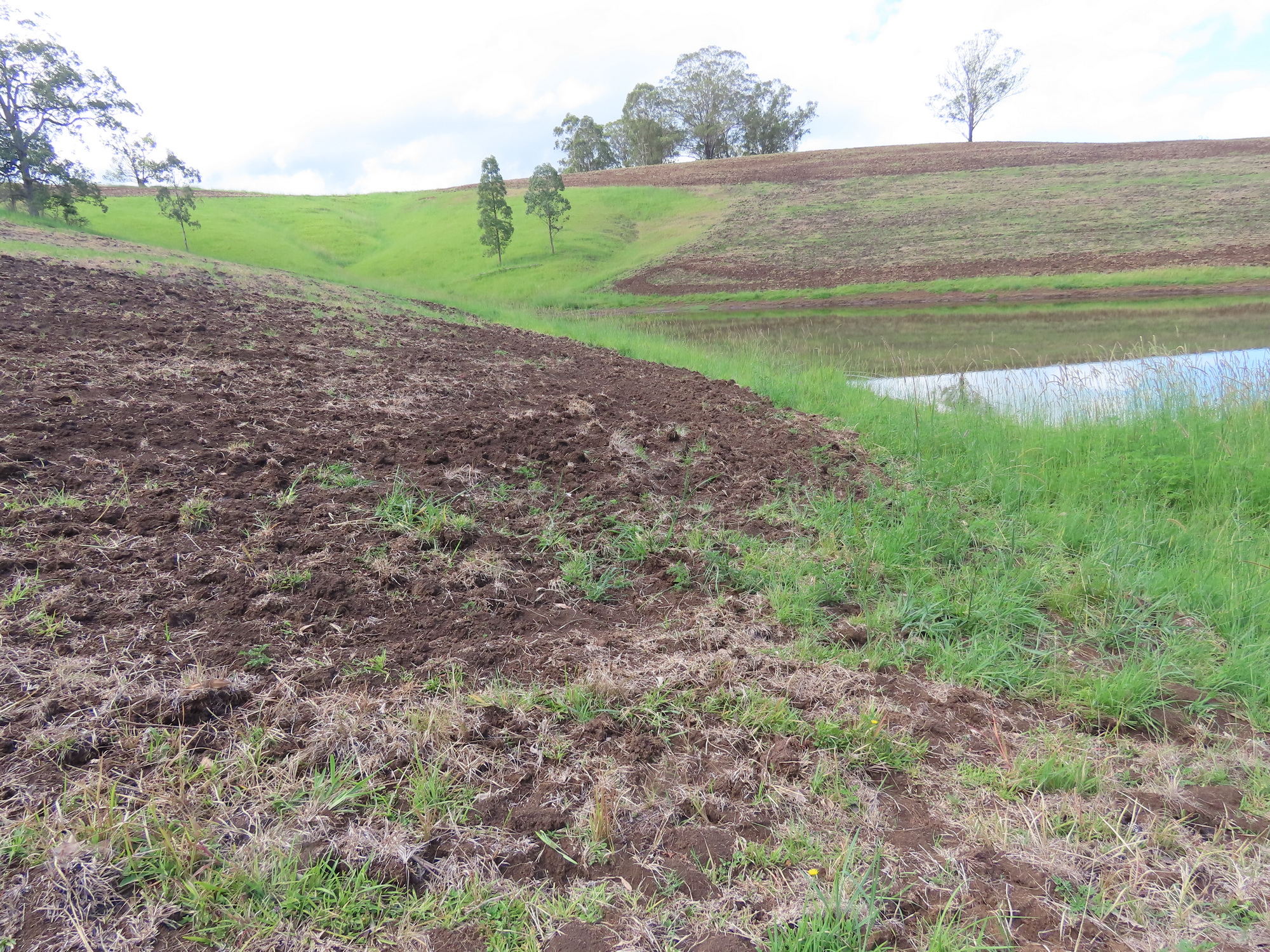
Photo: A paddock to the north-east of Kyogle, claimed to be some of the best Koala habitat in NSW with a Koala density of 0.36/ha, higher than the best habitat in the Great Koala National Park.
Read morePost-Logging Audit Guide
This is a guide that community members can use to help post-logging surveys / audits of NSW State Forests.
Breaches can be used to record the negligence of FCNSWs forestry operations and should be reported to the EPA with clear photos and GPS coordinates. It's a good idea to gather data in a group to ensure there's no errors.
Download it here.

Fridays4Forests
Fridays4Forests 10/6/22 - Events Across Australia
Posted by Sean O'Shannessy · June 12, 2022 11:09 AM
Fridays4Forests 3/6 - Lismore @ Trees Not Bombs
Posted by Sean O'Shannessy · June 03, 2022 2:08 PM · 1 reaction
Fridays4Forests 27/5/22 - Save Our Oldgrowth Trees Campaign Launch
Posted by Sean O'Shannessy · May 27, 2022 2:59 PM
Premier must stop logging of Koala habitat
Following NEFA's finding last Sunday of an exceptional Koala population in Braemar State Forest, south of Casino, NEFA is calling on the Premier to intervene to ensure that the required thorough searches for Koalas are undertaken and all Koala High Use Areas protected.

Koala scats were found under 42 trees in a 3ha area of Braemar State Forest marked up for logging, 81 Koala scats were found under this single tree where none had been found by the Forestry Corporation.
Read moreNEFA ASKS TO BE ALLOWED TO STOP ONGOING ILLEGAL LOGGING
Following the finding of yet more widespread and ongoing breaches of logging laws, the North East Forest Alliance is calling on the Baird Government to restore the rights of the public to take the Forestry Corporation to court to enforce environmental laws,
"If the Baird Government refuses to enforce the logging rules, then let us do it" said NEFA spokesperson Dailan Pugh.
"For years we have been finding the same sorts of logging offences, time after time after time. The Forestry Corporation are being allowed to flout environmental laws with impunity. The Environmental Protection Authority's (EPAs) lax regulation is clearly not working".
Damning results for Cherry Tree audit

NEFA has documented that the Forestry Corporation of NSW have breached the Environment Protection and Biodiversity Conservation Act by not abiding by a national recovery plan, the National Parks and Wildlife Act by roading and logging the Endangered Ecological Community Lowland Rainforest, as well as committing breaches of 4 conditions of the Integrated Forestry Operational Approval, 41 conditions of the Threatened Species Licence, 19 conditions of the Environment Protection Licence, 7 conditions of the Fisheries Licence and numerous conditions of their own Harvesting Plan.
Audits
A realistic method for identifying occupied Koala habitat
Posted by Dailan Pugh · January 30, 2024 11:36 PM
Stop Work Requested for Styx River State Forest
Posted by Dailan Pugh · December 03, 2023 11:34 AM
Stop Work requested for Moonpar State Forest
Posted by Dailan Pugh · November 21, 2023 8:03 PM
The logging rules explained
Logging Prescriptions
Forestry operations have a profound impact on native plants and animals. Natural forests are normally multiaged, with large numbers of big old trees providing hollows for nesting and denning, along with abundant nectar and seed resources. They also contain mature and young trees providing for succession as trees senesce and die. The understorey may naturally be open and grassy or more often is comprised of a wide diversity of understorey plants providing nesting sites, foraging habitat, and essential food resources for a suite of species. Even the dead trees and logs are critical habitat for numerous species.
In general, forestry aims to remove the mature trees for timber and get rid of the big old trees and unsuitable species that suppress regrowth of commercial species. Understorey and logs are just impediments. The outcomes are often a mess due to loss of critical habitat trees, early removal of potential sawlogs, excessive damage to retrained trees, poor regeneration, escaped burn-offs, significant soil erosion, stream pollution and massive weed invasion.
Plants are killed by logging, trampling with machinery, burning and being smothered by weeds. Animals are directly killed in falling trees and by being crushed in logs and burrows, and slowly by loss of dens, nest sites, territories and essential food resources.
Of those 175 animal species identified as being of particular conservation concern in north-east NSW, a total of 7 mammals (excluding bats), 27 bats, 31 birds, 16 frogs, 5 turtles, 15 lizards and 8 snakes were identified as being specifically vulnerable to logging, with many of these species, and a number of others, also vulnerable to the associated fire regimes, hydrological changes, stream pollution and weed invasions. For 41 of these 109 species logging is identified as a primary (number 1) threat. (see Threatened Species).
In a natural forest rainfall is mostly intercepted by the canopy or absorbed by the ground cover. Subsurface flows of excess waters then generate streamflows. In logging operations the reduced canopy and widespread soil compaction and baring result in overland flows that transport large volumes of sediments and nutrients directly into streams where they have significant long-term impacts on stream biota (see Logging impacts on streams). Impacts on stream flows are also long lived as the regrowth forest has high water demands and there is less surplus for streams (see How Forests Regulate Streamflows).
It is obvious that if we want to limit the impacts of logging on native species, soils and streams then we need to restrict the scale and location of activities we allow to occur. Regulation of forestry activities was found to be necessary because of the Forestry Corporation’s repeated failures to voluntarily minimise their impacts (see The Battle to Protect Threatened Species, The Battle to Protect Soils and Streams).
Forestry operations on public lands in north east NSW are governed by the Integrated Forestry Operations Approvals (IFOA) for Upper North East Region and Lower North East Region, and the licences they contain. These are referred to as Environmental Protection Licence (EPL), Threatened Species Licence (TSL) and Fisheries Licence (FL). Together with various clauses of the IFOA these constitute the regulatory regime applied to forestry operations on the public’s state forest lands in north-east NSW
The Integrated Forestry Operations Approval is one of the means by which NSW implements obligations and undertakings given in the joint NSW and Commonwealth North East NSW Regional Forest Agreement (Cl 36,48) and is the principal vehicle by which Environment and Heritage Values that are impracticable to include in reserves can be considered. The IFOA, along with the CAR reserve system, is required to provide for the protection of rare or threatened flora and fauna species and ecological communities (Cl 60). A key requirement is to monitor and review the sustainability of forest management practices (ie Cl 53), which includes the IFOA (Cl 52).
While we now have a comprehensive regulatory process for the management of State forests, the prescriptions are inadequate because they are the result of numerous political compromises with expert opinions and evidence often ignored. Neither have they been subject to monitoring and expert review. Even the minimalist prescriptions now applied are routinely flouted by the Forestry Corporation. (see Protecting Exclusion Areas, Doing Surveys, Protecting Threatened Fish, Protecting Habitat Trees).
Commonwealth Requirements
There are a number of species that are threatened at a Federal level and should be taken into account before the Commonwealth Government signs off on Regional Forest Agreements. This is another aspect of government process that is a dismal failure.
This report reviews the protection applied both in theory and practice to nationally threatened species and ecological communities in forestry operations in the North East NSW Regional Forest Agreement (NE RFA) area.
For more information on other aspects of logging prescriptions see the following links:
The Battle to Protect Threatened Species
The Battle to Protect Soils and Streams
How Forests Regulate Streamflows
NOTE: The Forestry Corporation has undergone many name and structural changes since the Forestry Commission of NSW was first formed in November 1916. In August 1993 the Forestry Commission adopted State Forests of NSW as its trading name and was overseen by a board of Governance. Nothing much changed on the ground. In November 2005 the Forestry Commission again tried to change its image by adopting the new brand name of Forests NSW. On 1 January 2013 Forests NSW was corporatized and became the Forestry Corporation. These names are used interchangeably throughout this site, though to avoid confusion attempts have been made to use the name Forestry Corporation to apply to all incarnations.
What is it about forests that you value?
Community Interest
State Forests are part of the public estate effectively controlled by the will of the people of NSW.. Along with National Parks, Nature Reserves and State Conservation Areas, and numerous schools, hospitals, sporting, camping and recreation areas, State forests are Crown lands. State forests are public lands that have been allocated for timber production under the control of the Forestry Corporation.
The community has the right and responsibility to ensure that State forests are managed in the community’s best interests. The community has repeatedly identified that they place a very high value on native forests for wildlife, beauty, water and recreation, compared to a relatively low value for logging, mining and shooting. For example the Community Attitude survey for the Upper North East Comprehensive Regional Assessment (McGregor et. al. 1997a) established that the priorities respondents gave to “various activities with relation to public forests” were;
-
protecting native plants and animals (100%),
-
maintaining sites of natural beauty (99%),
-
educational/scientific (97%),
-
maintaining water quality (96%),
-
aboriginal sites (89%),
-
bushwalking/picnics (87%),
-
protecting wilderness (87%),
-
camping (79%), and
-
eco-tourism (75%).
Exploitative uses of public lands received a lot less support (timber production 24%, woodchipping 7% and mining 13%), with the highest opposition being to mining (72%), hunting (70%) and woodchipping (65%).
In response to the question “what is it about forests that you value?”, those values ranked highest were aesthetic (80%), conservation reasons (46%), spiritual (25%), intergenerational equity (14%) and recreation (10%) as compared to relatively low values for economic/employment (6%) and economic goods and use (5%).
While State Forests have been allocated for timber production, the Forestry Act 2012 requires that they be managed in compliance with the principles of ecologically sustainable development, with timber supply environmentally sustainable, and with regard to the interests of the community.
Large areas of State Forests are still required to be added to the reserve system to satisfy the national reserve targets and protect viable fauna populations (see CAR Reserves), logging is being undertaken at an unsustainable rate (see Over-logging ), and they are not being managed in an ecologically sustainable manner (see Bell Miner Associated Dieback), (Logging Prescriptions). NEFA therefore maintains that they are not being managed in the community’s best interests.
REFERENCES
McGregor, A., Gibson, C., Miller, F. and Sharma, K. (1997a) Thinking About Forests, community attitudes towards forests in the Upper North East CRA region. Unpublished report prepared Department of Geography, University of Sydney, for the NSW CRA/RFA process.